Why clients go quiet (it is almost never about you)
A lead who took your Protection Check and then vanished did not decide against you. Something else happened: payday was two weeks away, the spouse had questions, a relative "knows an agent", or the number on the report was scary and they closed the tab. Silence is the default state of a busy person, not a verdict.
That reframes the job. You are not chasing someone who said no. You are showing up, briefly and usefully, until the day the timing is right — and in the Philippines that day is often predictable: the 15th and the 30th, the June tuition scramble, the December 13th-month pay. Messenger is where this happens: ads on Messenger reached 61.8 million people in the Philippines in early 2025 — 53% of the whole population — according to DataReportal's Digital 2025 Philippines report, and it is where your client already reads everything else.
The rules every follow-up message to an insurance client should follow
Before the scripts, the rules that make them work:
- One idea per message. A number, a question, or a date. Never all three.
- Give them a way out. "No worries if not" is not weakness — it is what gets the reply.
- Refer to their report, not your product. "Your income protection gap was ₱1.5M" beats "our VUL has great benefits" every time.
- No guilt. Never "I've messaged you three times." They know.
- Same time of day, every time. Late morning on a weekday; never past 9 PM.
You will notice that every script below is under sixty words. That is not an accident. If it does not fit on one phone screen without scrolling, cut it.
The seven messages, in order
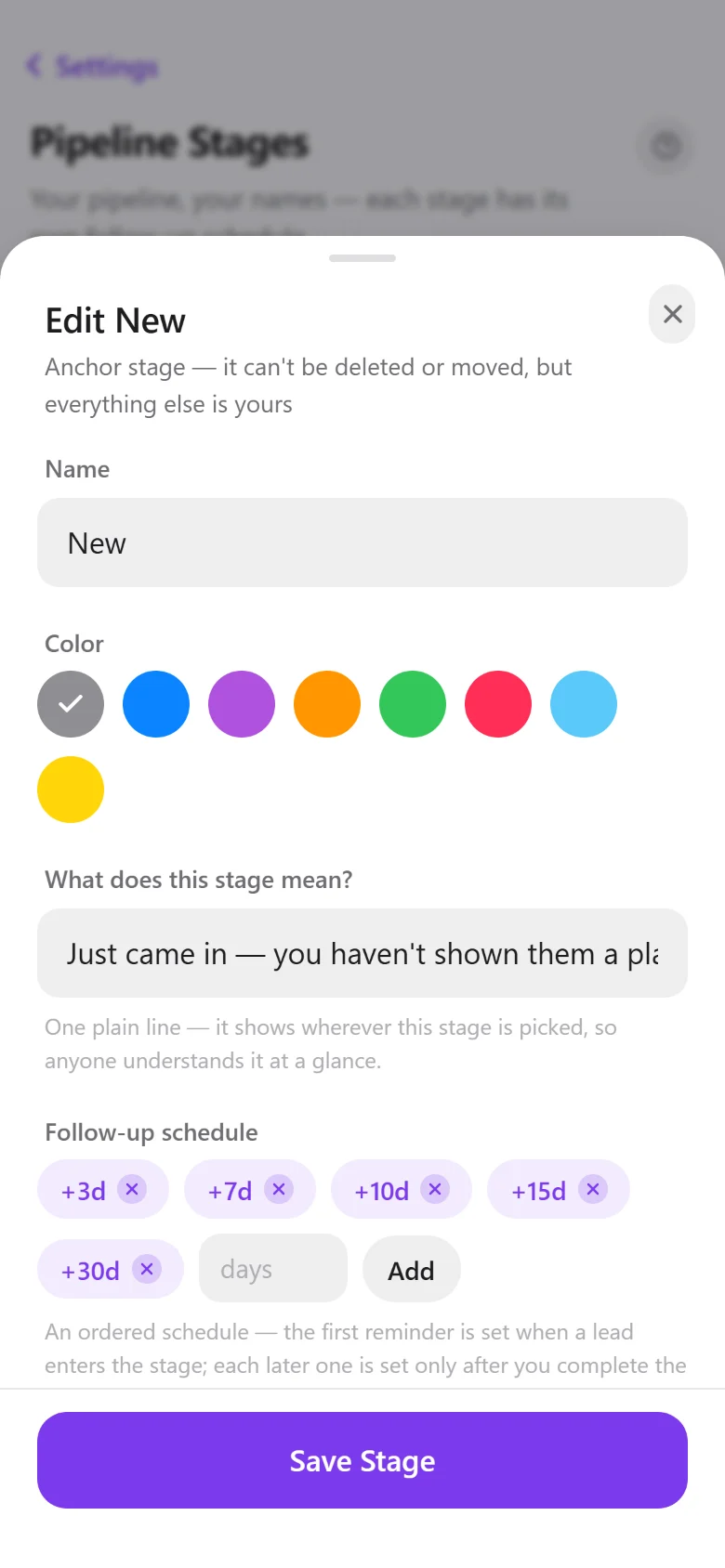
Send these on roughly day 3, 7, 15, 30, 45, 60 and 90 after the last real conversation. (Timing is its own section below.) Replace the brackets with the person's details — the specificity is the whole point. And if typing the same seven messages to forty people a month sounds like the thing you will stop doing by week three, that is exactly what automatic follow-ups are for: the same messages, sent as you, with a pause the moment the person replies.
1. The "one thought" (day 3)
Hi Maria! One thought from your report that stuck with me: the income-protection line was ₱1.5M, and that's the one most families skip. No action needed — just wanted you to have it. 🙂
2. The "surprising number" (day 7)
Quick one, Maria — most people who take the check expect the life cover number to be the big one. For you it was critical illness (₱2.0M). Curious if that surprised you too?
3. The question (day 15)
Still thinking it over? Totally fine. One question, if you don't mind: which of the three numbers on your report worries you most? I'll send one idea for that one only.
4. The door left open (day 30)
Maria, I'll stop nudging after this — no pressure at all. If you ever want to walk through your report (30 minutes, online), here's my calendar: [your booking link]. Otherwise, I'm here whenever it's the right time.
5. The seasonal hook (day 45, or the nearest payday / season)
Tuition season is coming up — I've had two families ask this month how education cover actually works. If you want the two-minute version for [child's name], say the word.
6. The story (day 60)
Something happened this week that made me think of our chat: a client of mine was diagnosed in March, and the cover paid out before the first hospital bill. I'm not sharing that to scare you — just that this is the reason I do this. Coffee sometime?
7. The check-in (day 90, then monthly)
Hi Maria! Just checking in — nothing to sell. How's [something you know: the new job / the baby / the business]? If your situation changed, your numbers changed too; happy to re-run the check anytime.
Timing: the gaps between messages
The gaps get longer, never shorter. Day 3, 7, 15, 30 is the active stretch — four messages in a month, each with a reason. After that it is monthly, and the monthly message is the lightest of all. A lead who gets fewer messages over time feels respected; a lead who gets more feels hunted.
| After the last conversation | Message | Channel |
|---|---|---|
| Day 3 | 1 — one thought | Messenger |
| Day 7 | 2 — surprising number | Messenger or email |
| Day 15 | 3 — the question | Messenger |
| Day 30 | 4 — door left open (with booking link) | |
| Day 45 | 5 — seasonal hook | Messenger |
| Day 60 | 6 — the story | Messenger |
| Day 90, then monthly | 7 — check-in |
Two timing details that matter here. Send between 10 AM and noon on a weekday — lunch-break reading, not dinner-time interruption. And if the person replies to any message, stop the sequence and talk like a human; the worst version of this system is a scheduled message landing an hour after a real conversation.
When to stop (and how to leave the door open)
Message 4 says you will stop nudging, so stop nudging. After day 30, everything is a monthly check-in with zero ask. If the person unsubscribes, blocks, or says "please stop", that is final — one message after "no" is the moment you become a story they tell about pushy agents.
But do not delete them. Mark them Lost, keep the birthday, keep the yearly note. The whole follow-up system exists for one scenario: the "Lost" lead from January who comes back in December because a friend's hospital bill made the number real — and yours is the only message still sitting in that inbox that does not feel like a sales pitch. That is not luck. That is showing up quietly for eleven months.
FAQ
How many times should I follow up with an insurance lead?
Four times in the first month, then once a month for as long as the person is reachable and has not said stop. Every message has one specific reason to exist; "just following up" is not a reason.
Should I follow up by Messenger or email?
Both. Messenger for the short, human messages (1, 2, 3, 5, 6) because that is where Filipinos actually read; email for the ones that carry a link or need to be findable later (4 and 7). Replies land wherever the person answers — meet them there.
What if the client replies but does not book?
Answer their question, then ask one more. "Which of the three numbers worries you most?" is the best second question I know, because it turns a general "still thinking" into a specific problem you can solve in one call.