Start with the truth about where clients come from
First, who is writing this. I am not a financial advisor. I am the software engineer behind NudgeNow, and since July 2026 I have personally onboarded every advisor who signed up — 33 of them as of August. Before building it, I sat down with a working Philippine advisor and mapped their whole cycle, from prospecting to the monthly check-in; since then I see which links get shared, which quizzes get finished, which follow-ups get a reply and which pipelines fill up. What follows is that cycle, plus what the data has confirmed. The playbook is the advisors'; the pattern-spotting is mine.
The pattern starts with a fact most new advisors are never told. The Philippines is one of the least-insured populations in the region: insurance penetration was 1.78% of GDP in 2025, up from 1.67% in 2024 and still below the Insurance Commission's own 2% target (IC figures, reported February 2026). The people around every advisor — batchmates, titas, the parents at their kid's school — are mostly unprotected. Demand is not the problem. Contact is.
And the advisors who get clients steadily are not the loudest ones on Facebook. They are the ones with a list, a weekly plan they actually keep, and a follow-up system that does not depend on memory. Everything below is built on those three things.
One rule before the steps — it is the principle NudgeNow's entire funnel is built on: you are not selling a policy in any of these steps. You are offering a two-minute Protection Check and a free Clarity Call. The sale happens in the call, after the person has seen their own number. That distinction is the whole difference between an advisor people avoid and one they refer.
Week one: the 100-name warm market list
Your warm market is everyone who would answer if you messaged them today. Most advisors write down forty names, feel awkward, and stop. Unit trainings call the exercise "Project 100" for a reason: the real list is over a hundred, and it is the single highest-converting source an advisor will ever have, because trust is already there.
Build it in one evening, by category, not by memory: family, high school and college batchmates, current and former officemates, church or community groups, your barangay, parents in your kids' circle, the people you actually transact with (your suki, your dentist, the shop owner who knows your name), and everyone who has ever tagged you in a post. The full method, with the prompts that get you past forty, is in the 100-name warm market list guide.
Then rank the list. Not by who has money — by who depends on someone or who someone depends on. New parents. Breadwinners. OFWs sending money home. The recently promoted. That is your top thirty, and they get your first two weeks.
How to get clients on Facebook as a financial advisor in the Philippines (without being "that" agent)
Facebook is where Filipino advisors get found, and it is also where most of them burn their reputation. The posts that bring conversations are not "Message me for a quote". They are short, specific and useful: one real story (with permission), one number that surprised a client, one myth corrected. Three posts a week, mixed with normal life, is enough. Nobody follows an advisor who only posts about insurance.
The mechanism that actually produces clients is not the post. It is the comment → DM step. Someone reacts or comments, the advisor replies in the comments, then moves to Messenger with one question — never a pitch. The shape that gets replies looks like this:
Hey Paolo, thanks for the comment! Quick one — have you ever actually checked how much protection your family would need if something happened? I have a two-minute check that shows the number. Want me to send it?
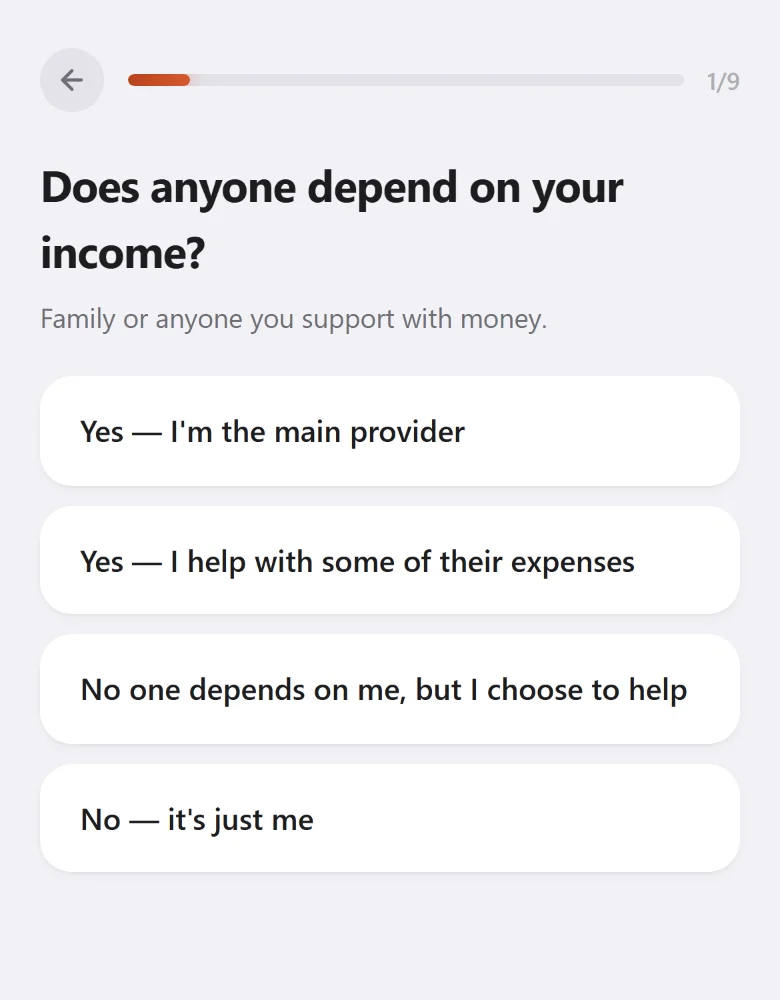
That last line matters. You are asking permission to send a link, and the link does the explaining. This is the part I can speak to from the data rather than from the field: a done-for-you funnel exists so that instead of typing out a value proposition in Messenger, the advisor sends a quiz that shows the person their own protection gap and ends in a booking link that chases the lead for you. The lead books a Clarity Call from the advisor's real calendar; if they do not, the system follows up so nobody has to remember.
Two Facebook rules that keep you out of trouble. First, groups: most advisor and parenting groups ban links, so post the value and say "comment 'check' and I'll send it" — the DM is where the link goes. Second, never post a client's numbers or name without written permission. The Data Privacy Act applies to you, not just to your company.
The Clarity Call: what to offer instead of "let's meet"
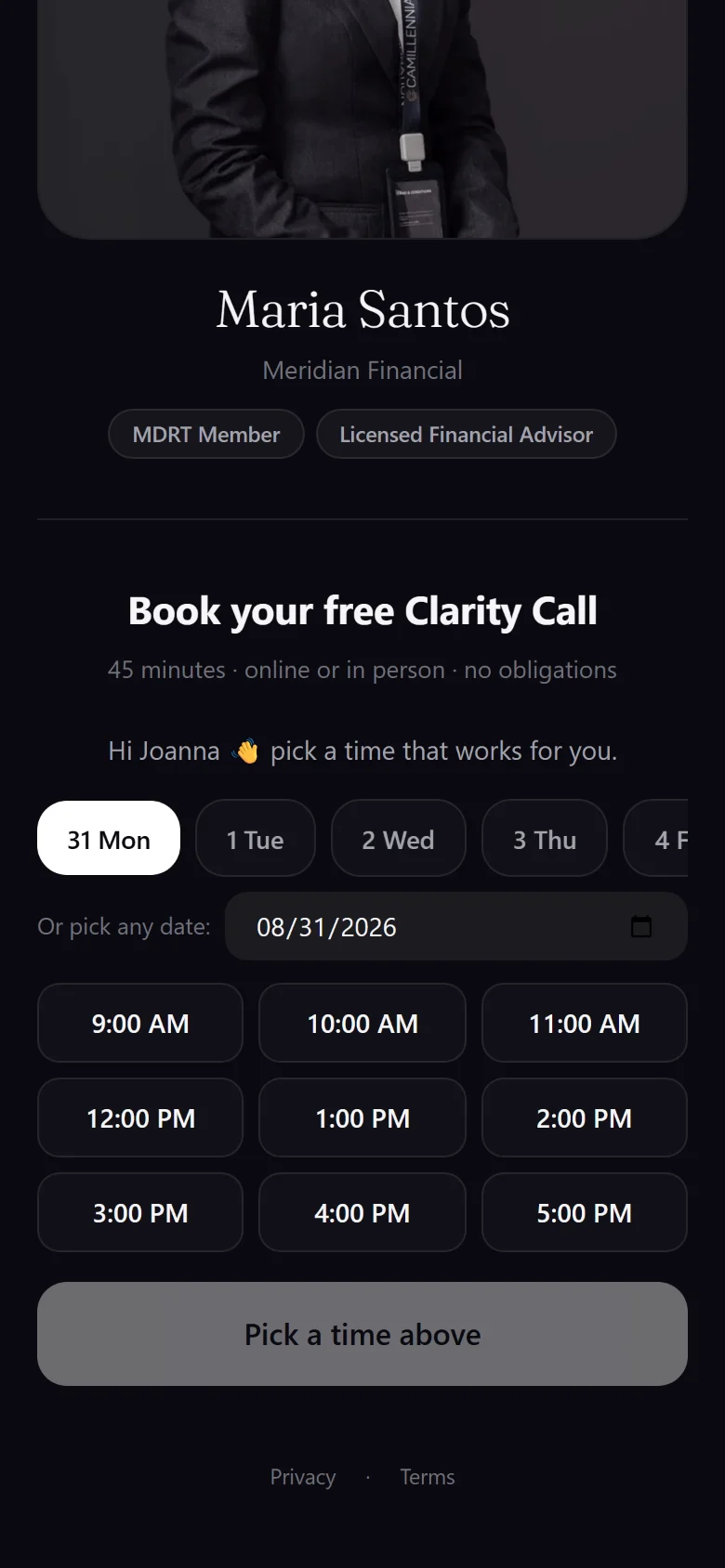
"Can we meet?" is the request that kills most conversations, because the person hears "two hours of being sold to". Rename the meeting, shorten it, and give it a purpose the lead can say yes to:
- Name it. "Clarity Call" is the default name in NudgeNow because it promises an outcome, not a product. Call it whatever fits you, but name it.
- Cap it. Thirty to forty-five minutes, online by default. Google Meet or Zoom — a Makati-to-Quezon City commute is not a reason someone should wait a week to see their number.
- Make it about their report. "Let's go through the three numbers on your report and see which one matters first" is a very different invitation from "let me present a plan".
- Let them pick the time. A link with real availability beats four messages of "kelan ka free?" — every message in that thread is a chance for the lead to go quiet.
Inside the call, keep one order: the lead's numbers, the lead's questions, then one recommendation. The illustration comes out only if the person asks what it would cost. Most people leave a first call without buying, and that is fine — the follow-up handles it.
Referrals: ask at the right moment, with a script
Referrals are the cheapest clients an advisor will ever get, and most advisors ask for them at the worst possible time — the day the policy is issued, when the client feels spent. The right moments are the ones where the client has just felt the value:
- Right after the Clarity Call, when they have seen their number and said "I never knew that."
- When a claim or a policy review goes well.
- On their policy anniversary, when the yearly review reminder goes out.
The ask is short and specific. Never "do you know anyone who needs insurance?" — that gets a polite no. Ask about one kind of person:
Grace, may I ask a favor? You mentioned your sister just had her first baby. New parents are exactly who this check was made for. Would you be okay sending her the link, or introducing us on Messenger? No pressure on her either way.
One referral ask per client per quarter is plenty. Write the date down.
Follow-up is where the clients actually are
Here is the thing that changes how an advisor spends the week, and the reason NudgeNow has automatic follow-ups at all: most people who take a Protection Check or sit through a Clarity Call do not buy the same day. They buy on the third, fourth or fifth contact — after the salary comes in, after they talk to their spouse, after a friend's hospital bill makes the number real. If the follow-up depends on the advisor remembering, the majority of the pipeline is lost to nothing more than a missed message.
So the follow-up has to be a system, not a mood. The default schedule NudgeNow ships for a new lead — a short, specific message on days 3, 7, 10, 15 and 30, then a light monthly check-in for as long as it takes, tuition season in June, 13th-month season in December — is not something I invented. It is the rhythm the advisor I interviewed in July 2026 already ran by hand, written into software. The messages are the same every time, which is exactly why they work: the advisor is not composing, they are sending. The seven messages, with the timing, are in 7 follow-up messages for clients who went quiet.
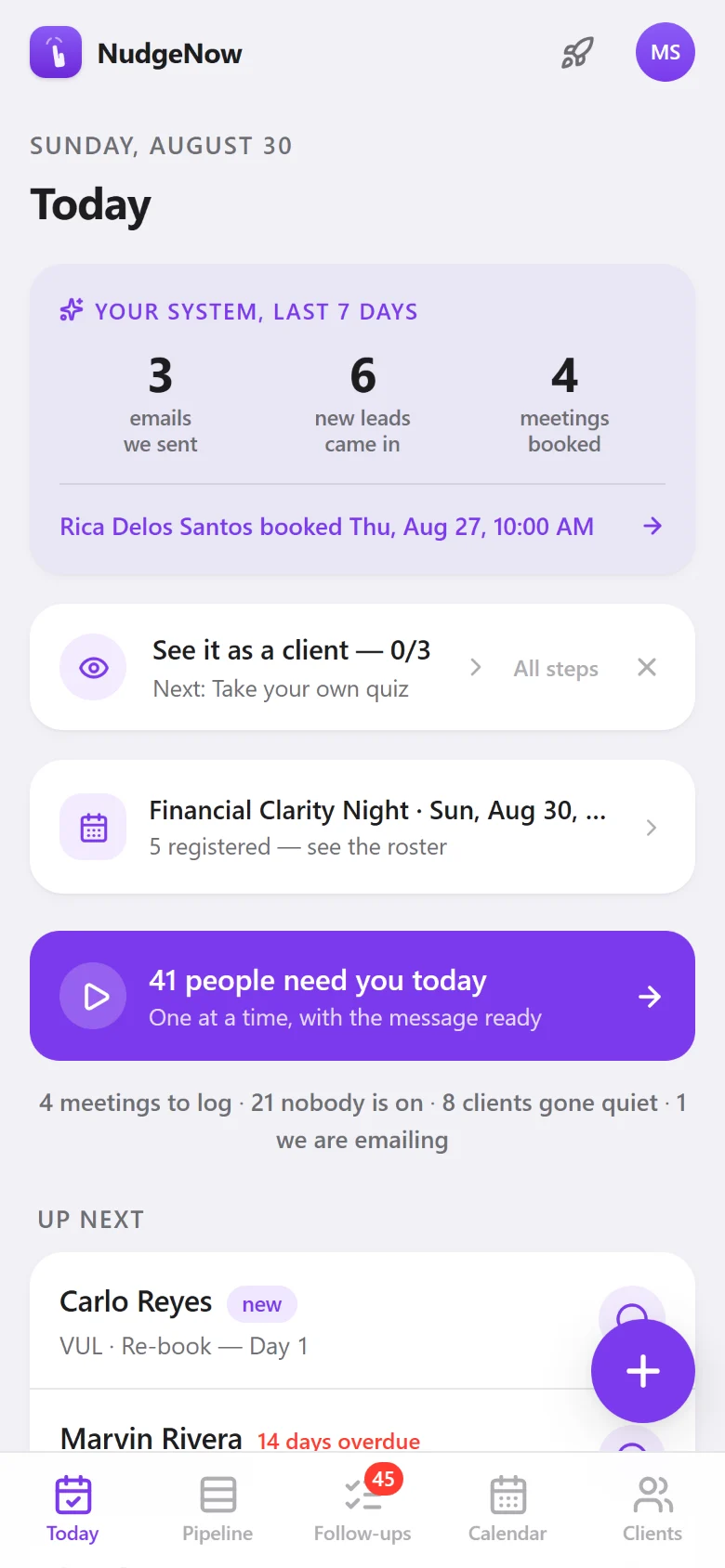
The other half of follow-up is the clients an advisor already has. A birthday message, a yearly policy review, a note when their kid starts school — these are not "nurture", they are the reason a client stays with the same advisor for twenty years and sends their whole family. They belong on the same calendar as the leads.
A weekly plan you can actually keep
The plan below is small on purpose: the smallest week that touches all three sources and the follow-up, not the week a training deck says an advisor should have. An advisor who does this for twelve weeks straight will have a pipeline; an advisor who does a heroic week and then vanishes will not.
| Day | 45 minutes on | What "done" looks like |
|---|---|---|
| Monday | Warm market | 10 new names messaged with the check, not a pitch |
| Tuesday | Follow-ups | Every lead due today gets their message before lunch |
| Wednesday | One useful post; reply to every comment; move two people to DM | |
| Thursday | Clarity Calls | Calls booked from the week's leads; one recommendation each |
| Friday | Follow-ups + referrals | Due messages sent; one referral ask to a happy client |
| Saturday | The list | Add 10 names, rank the top 30 again, plan Monday's ten |
Track three numbers a week: names contacted, checks taken, calls booked. Nothing else matters yet. When calls booked is steady, the policies follow — that part has never been the hard part for a licensed advisor who shows up on time.
As of August 2026, 33 advisors have created a NudgeNow account and 22 have published their site — small numbers, real ones, and every one of them started with the same list you are about to write. Who I am and how NudgeNow makes money is on the about page.
FAQ
How long does it take to get your first client as a new financial advisor?
The Insurance Commission licence is the slow part; the first client is usually someone the advisor already knows and simply had not asked. Starting with the warm market is faster than ads or cold lists for one reason — the trust already exists — but nobody can promise a timeline, and anyone who does is selling a course.
Should I buy leads or run Facebook ads?
Not in your first year. Paid leads are cold, expensive in pesos, and arrive without trust. Spend the money on a good photo and a booking link instead, and run ads only after your warm-market and referral sources are producing calls every week.
Do I need a website to get clients as a financial advisor?
No — you need a list and a follow-up habit. A website helps once people are looking you up: it is where a Facebook page cannot take a booking, show a quiz, or live on your own domain. The trade-offs are in do financial advisors need a website in the Philippines?